P. S. 173/Maxwell Vocational High School
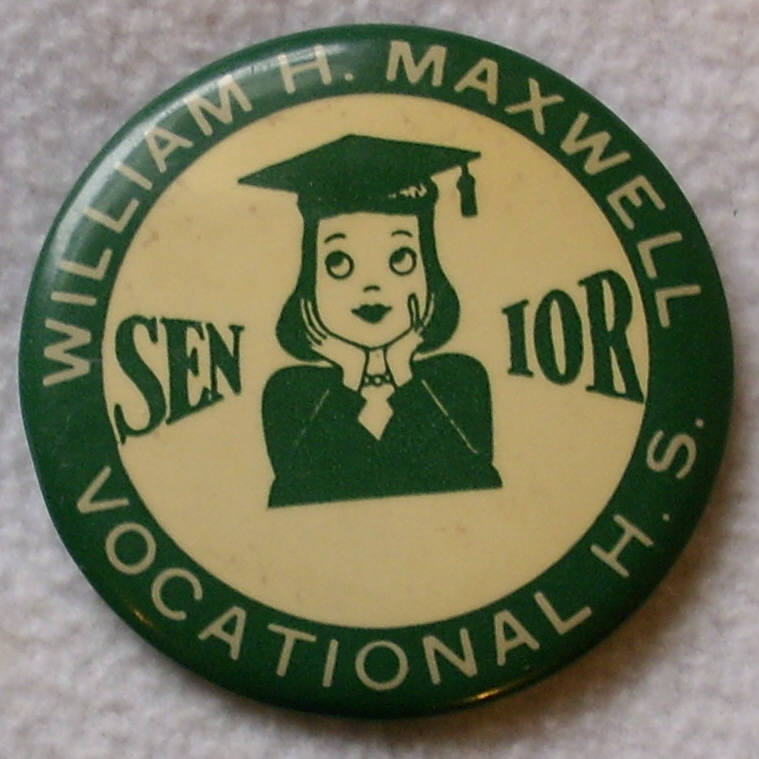
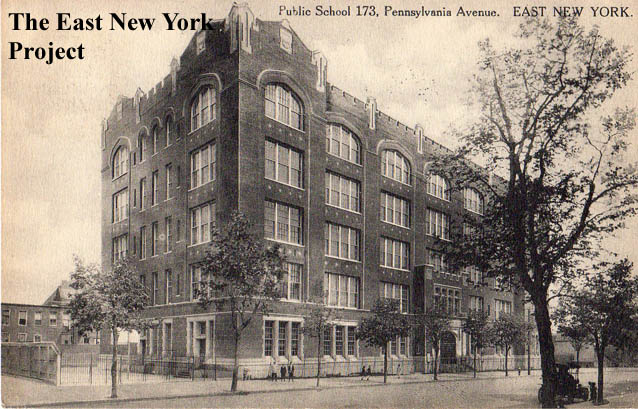
Located on the east side of Pennsylvania Avenue, between Liberty and Glenmore, the school opened as a grade school in 1913. The location was previously occupied by a church. In the 1940s, while still serving as a grade school, it also housed 900 students as an annex for the East New York Vocational School for Girls. The original ENY Vocational resided at 2416 Atlantic Avenue and as early as 1937 the city was trying to allocate funds for a separate girl's vocational facility. P.S. 173 was converted to William H. Maxwell Vocational School in 1950. William Maxwell was a former Superintendant of Schools who strongly supported vocational training. |
|
|
|
Public School 173, Pennsylvania Ave.
Dated:1923 Maker: P. Miller Status: Own (RG)
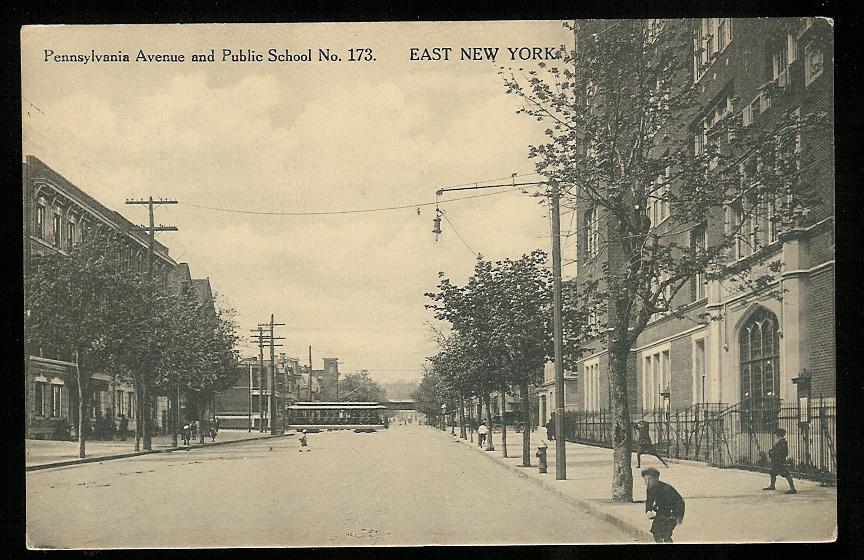
Pennsylvania Ave. and Public School No. 173
Dated: 1915 Maker: P. Miller Status: Need
Constructed in 1913, P.S. 173 began as a grade school. Sylvia Fine, a neighbor and future wife of Danny Kaye, attended 173 (and later Jefferson High.) In the story my aunt provides below, the school served as one of the first junior high schools in the 1930s. Although it was considered a girls vocational school when it opened in 1950, we know boys also attended the school.

|
|
|
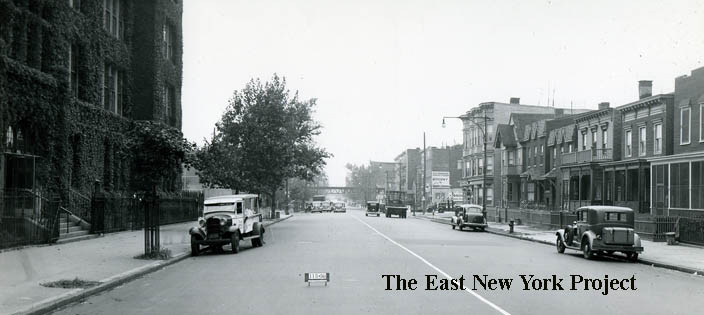
Pennsylvania Avenue, 1938
A great photo from the Brian Merlis collection showing P.S. 173 covered with ivy in 1938. |
|
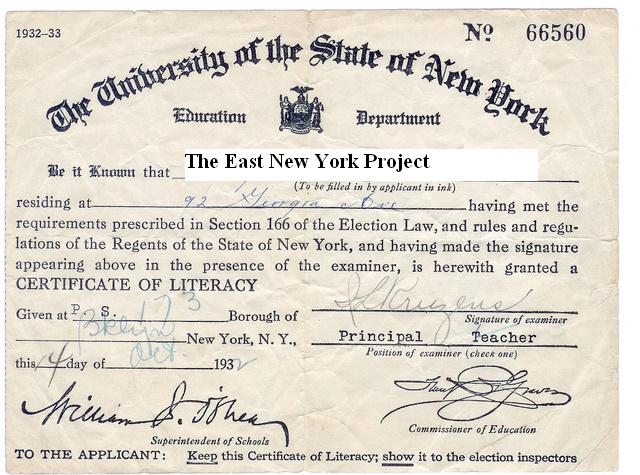 |
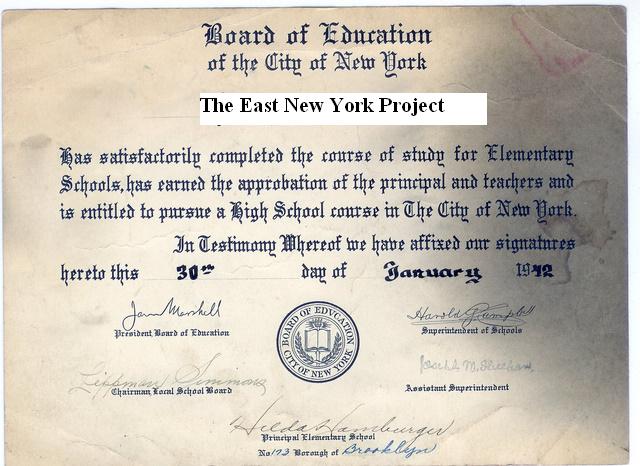
Public School 173 documents
A number of relatives attended 173. My aunt Mary Cornell explained to me in the 1930s
my aunts and uncles attended P.S. 63 up to grade six, then attended 173 for two years
prior to high school. That's my uncle's 1942 graduation certificate from 173 on the left.
By the mid-1940s, P.S. 149 replaced 173 as the local "junior high". On the right is my grandfather's 1932 literacy
certificate, based on an exam held at P.S. 173. I assume this was for voting registration. He
was not an immigrant, but may not have been able to document his education. |
|
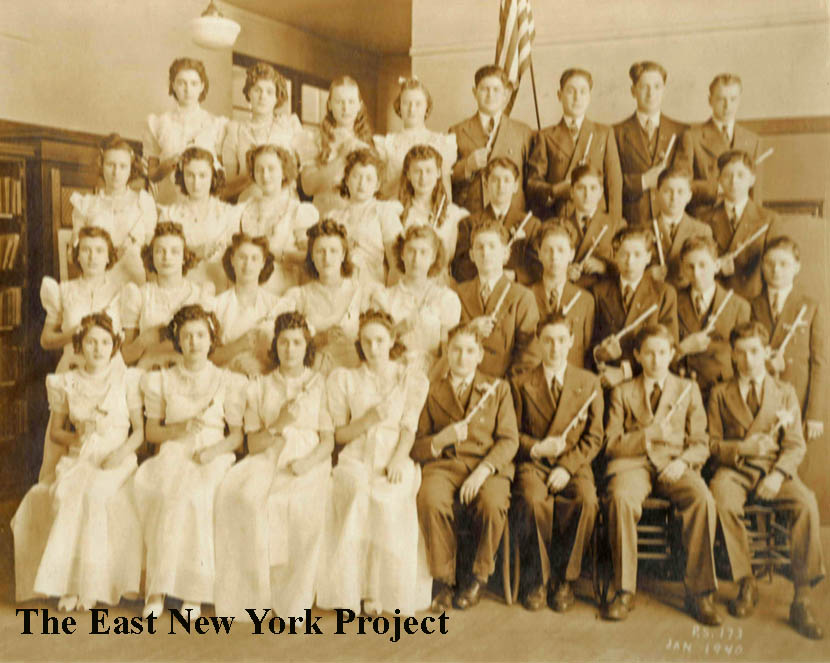
Public School 173 grads, Jan 1940
This image came with some IDs on the back; " Front row, L to R - Anna D'Agostina, Florence Bewish, Josephine Nizza, Deborah Goldappel,Philip Broad, Harold Hillman, Nathan ?, Peter Nantista
Second row, Estelle Stern, Anna Drago, Mary Bono, Mary Renda, Anna Pepitone, Albert Cohen, Ralph Diamond, Bennett Goldman, Abraham Rosenbloom, Frank?
Third Row- Rose Sipress, Beatrice Skolnick, Lela Melman, Gertrude Stein, Marcella Fromberg, John, Brown, Irving Bomzer,Milton Denety, Charles Mautzeri
4th Row- Beatrice Gillow, Caroline Galenti, Nina Kozak, Beverly Warshawsky, Murray Moses, John Abusso, William Newman, Chester Sadlowski" . |
|
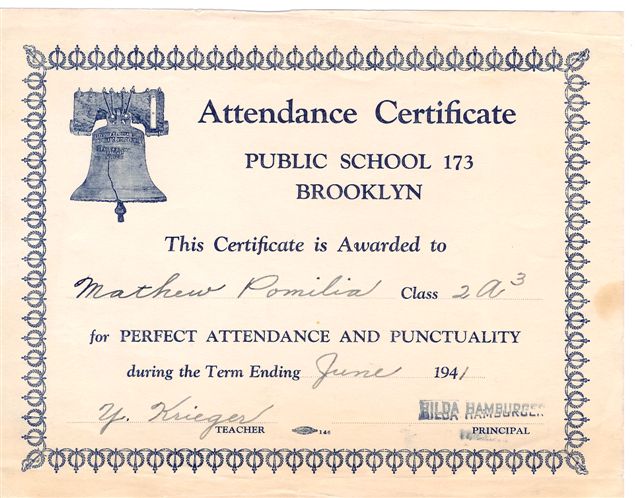 |
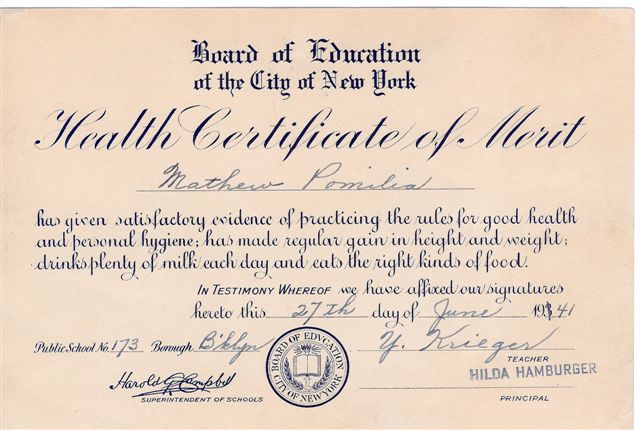
Public School 173 documents
Tony Pomilia also sent over some P.S. 173 documents, from 1941. |
|
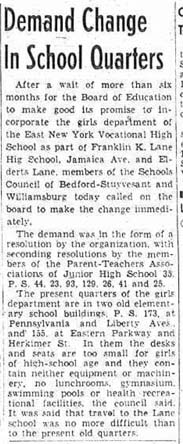
I was surprised to discover in this Feb 2, 1944 Eagle article that at one time Franklin K. Lane was supposed to incorporate the girl's vocational school. It would be another six years before P.S. 173 was converted into Maxwell. |
|
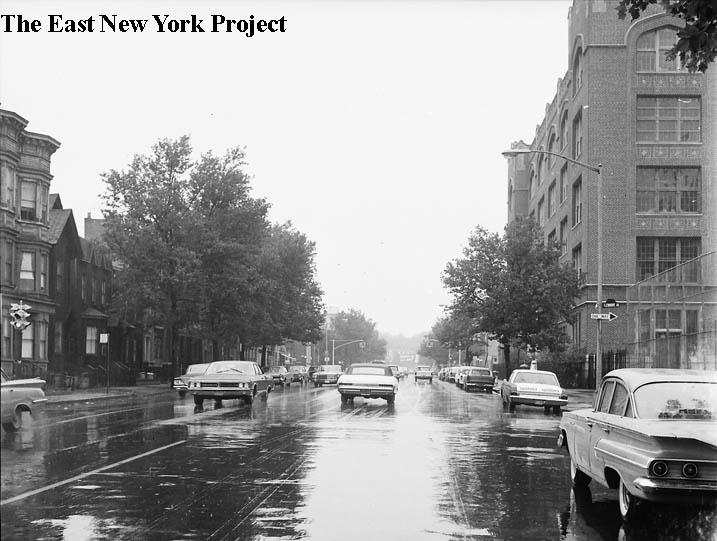
|
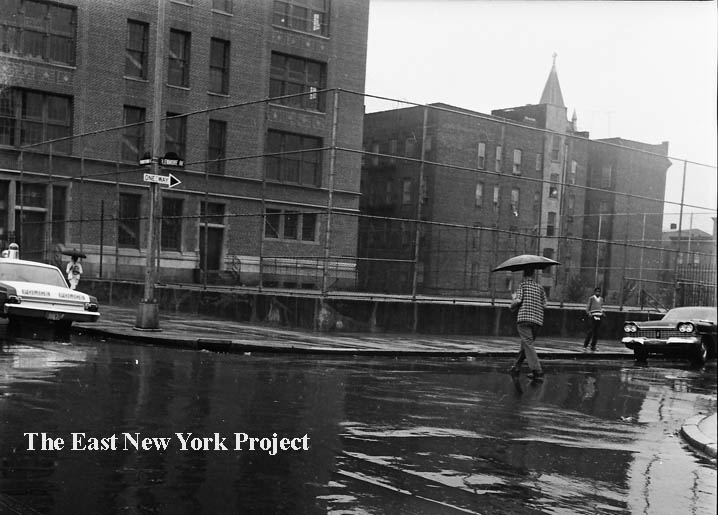
Two views taken in the 1960s; the first shows the schoolyard along Glenmore Avenue and the second is a view up Pennsylvania Avenue. |
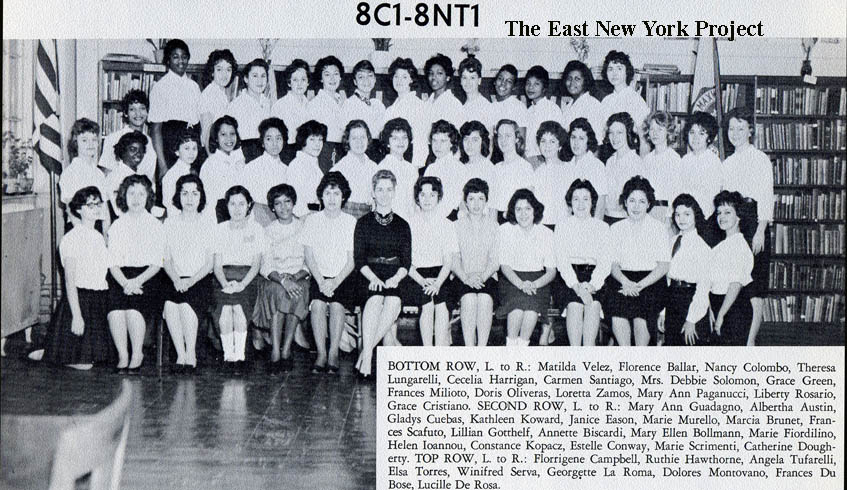
|
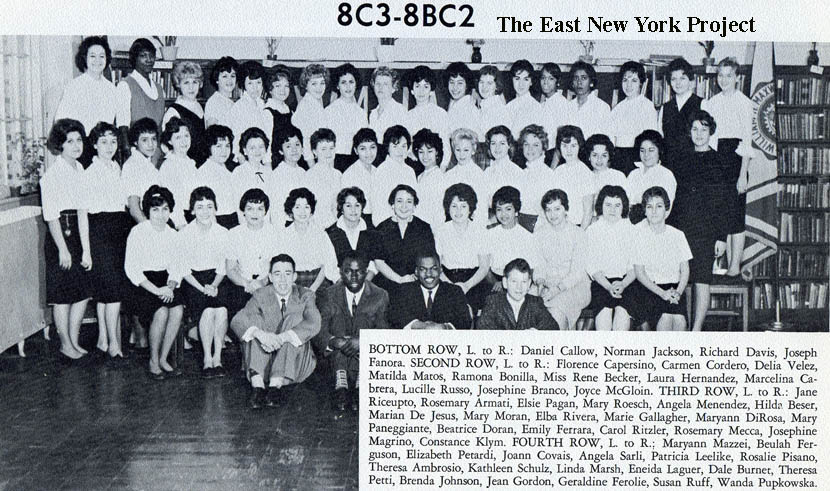 |
William H. Maxwell Vocational Yearbook, 1960
Entitled "Crystal", the 1960 yearbook commemorated the 10th anniversary of the school. I included two class pictures, one to clearly show boys attended
the school. |
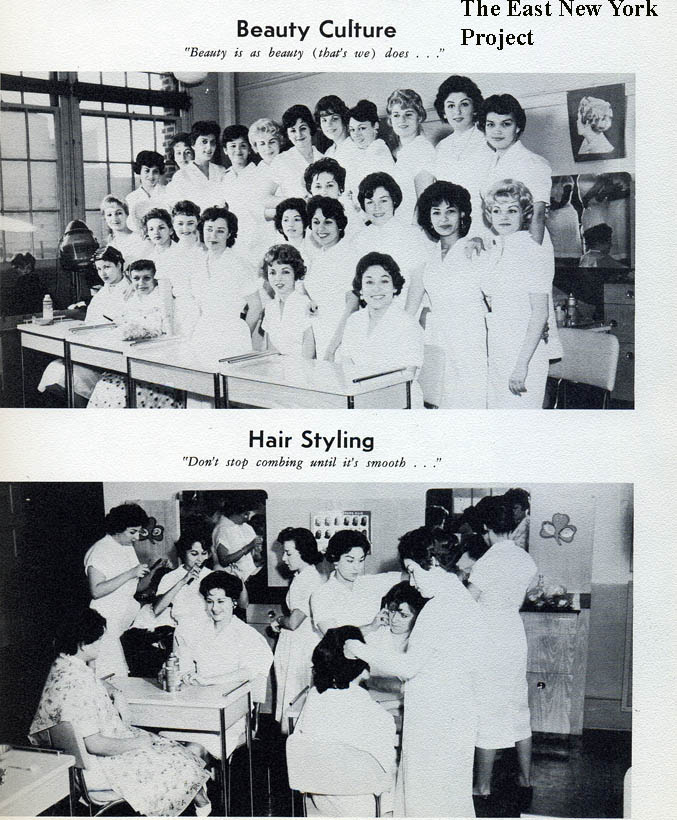
|
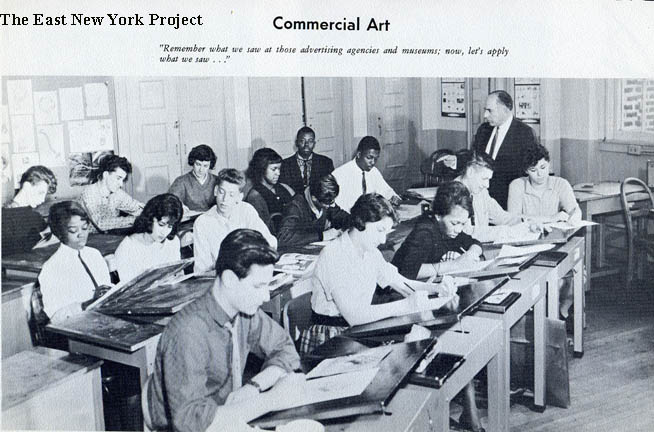 |
William H. Maxwell Vocational Yearbook, 1960
The next group offers insight into the course offerings. The Commercial
Art course seems to be a draw for the few male students. |
|
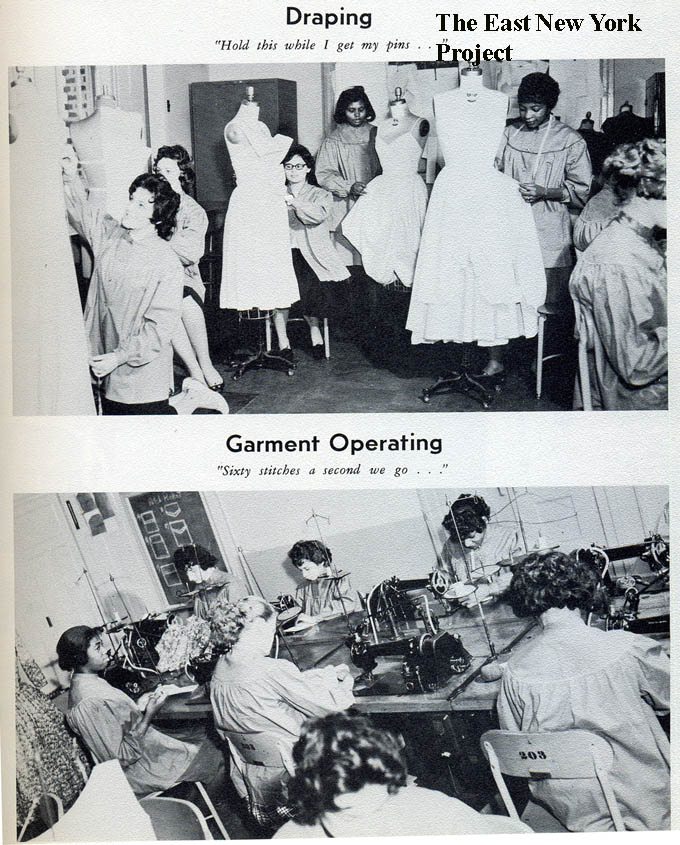 |
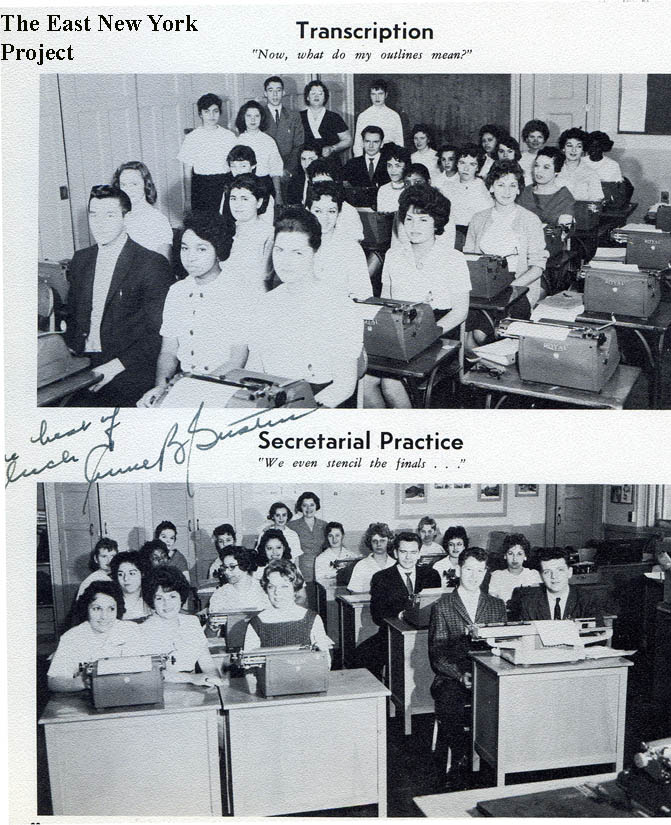
William H. Maxwell Vocational Yearbook, 1960
Typing, stenography, office machines were all typical fare. Can
someone explain the "gowns" they are wearing in the garment class? |
|
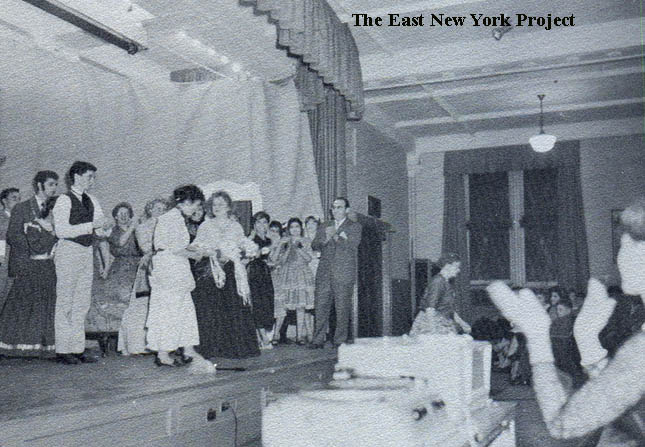 |
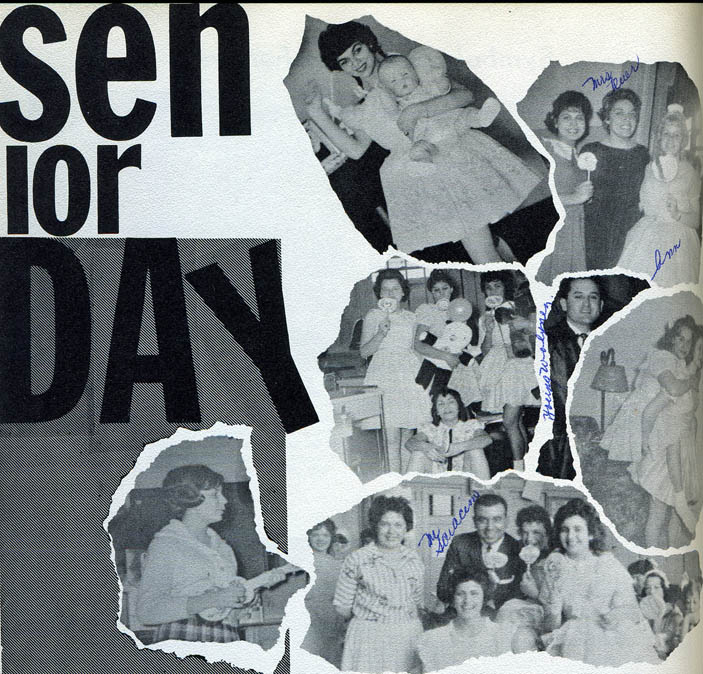
William H. Maxwell Vocational Yearbook, 1960
Lo and behold, another school that celebrated the tradition of
'Baby Day' for seniors. On the right, a shot of the stage after a performance of "Matchmaker". |
|
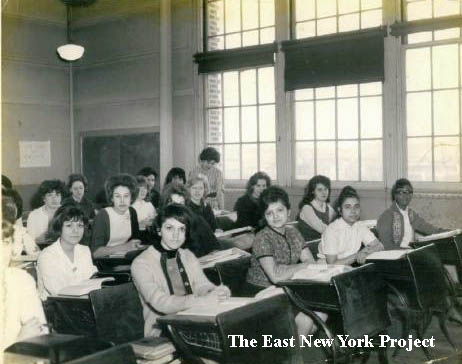 |
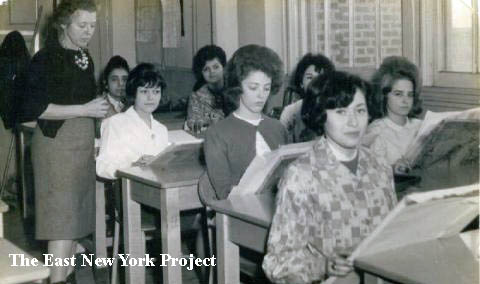
William H. Maxwell Vocational , 1964
Thanks to Augusto Torres and his wife Dorca Roman, who attended Maxwell and provides pictures of two classrooms in 1964. That's Mrs. Hirch's Commercial Art
class on the left and the economics class on the right. Those old school desks are a link to
the early days as a public grade school. |
|
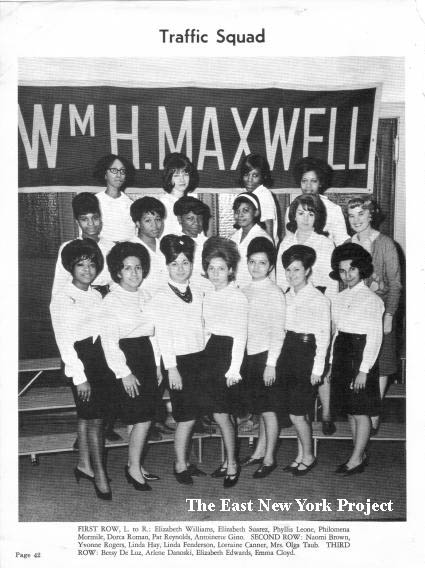 |
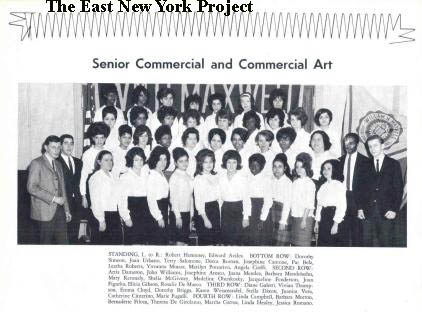
William H. Maxwell Vocational , 1964
Two shots courtesy of Dorca Roman's 1964 yearbook. |
|
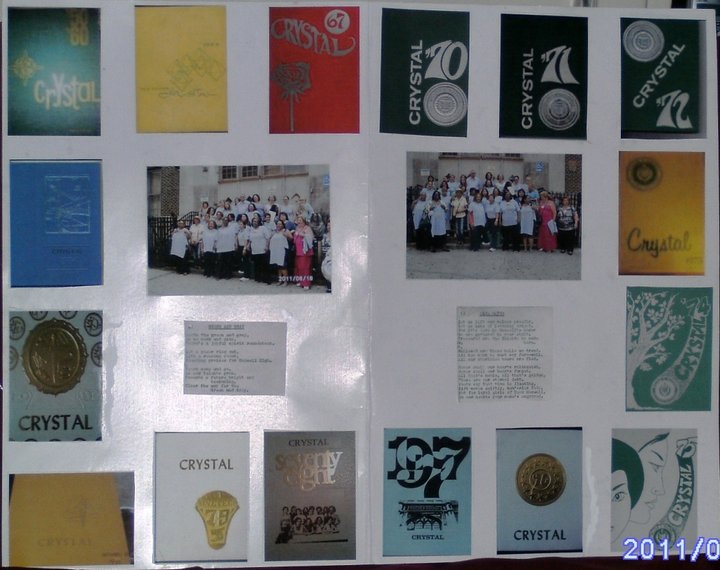 |
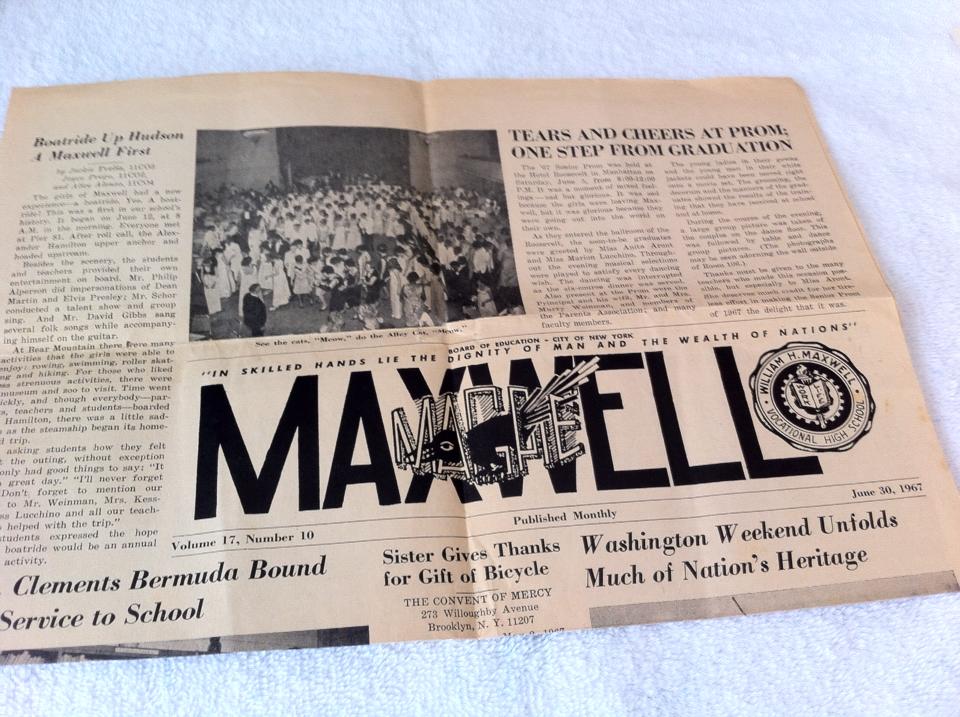
Evelyn Nieves supplies images of a few mementos; a 1967 copy of the school paper, the "Maxwell Magpie", and a poster of the school yearbook covers.
|
|
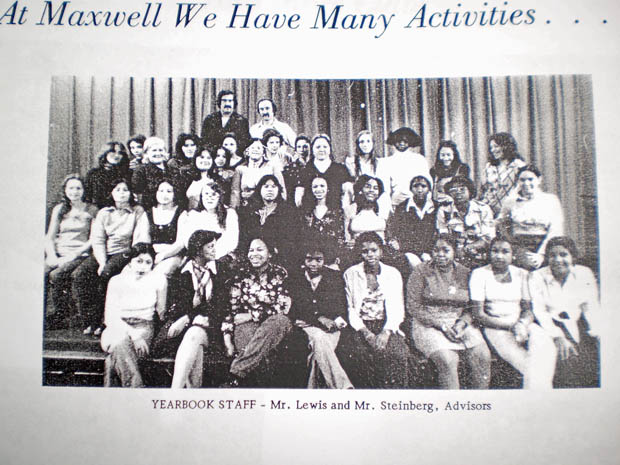 |
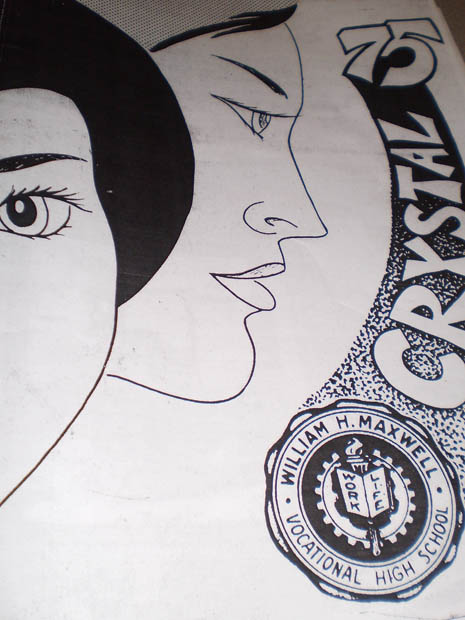
William H. Maxwell Vocational yearbook, 1975
Thanks to Evelyn Nieves who sends over a cover and inside shot of the 1975 yearbook.
|
|
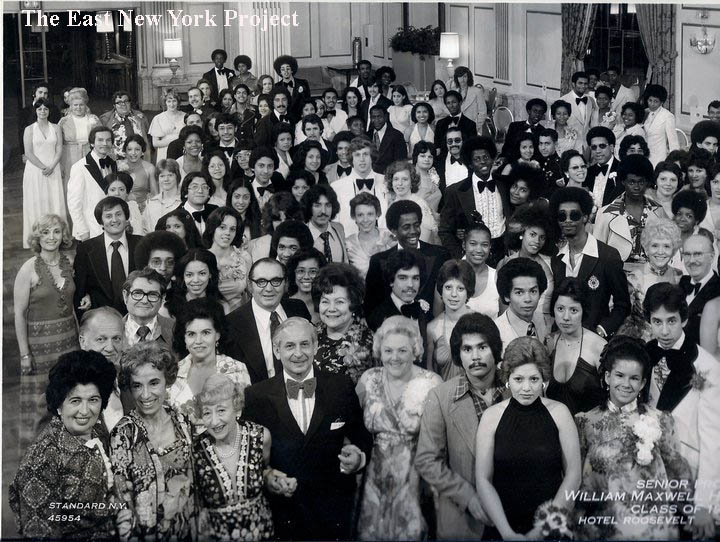 |
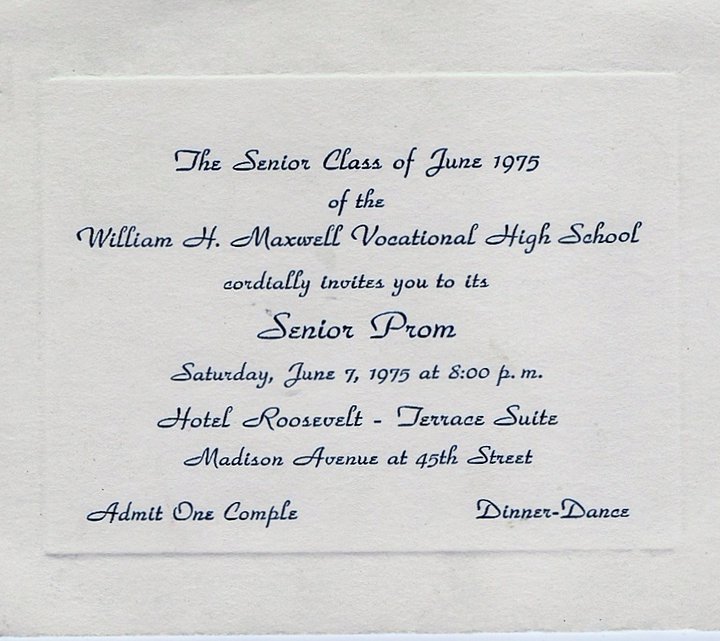
Evelyn also sent over the 1975 Prom invitation and group picture of the event. |
|
 |
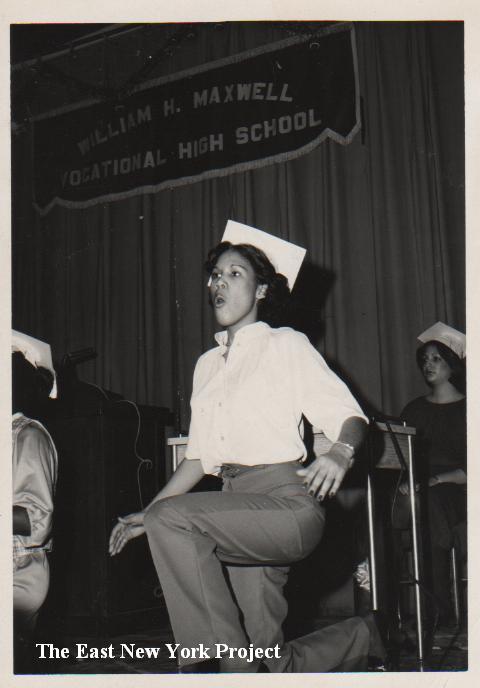
William H. Maxwell Vocational, 1979
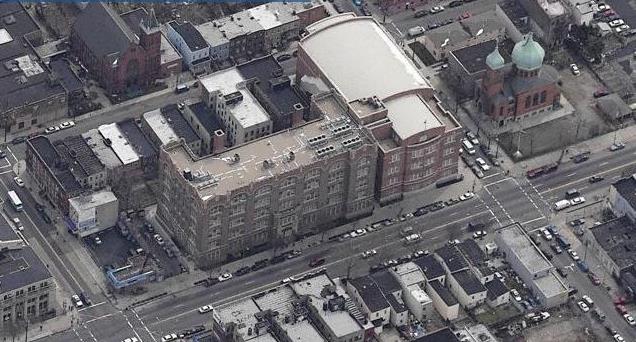
We see the stage again as Nilda Ruiz sent in this shot of herself performing at the school in 1979. On the right, the school today. The new addition on the right was done in 1997.
|
|
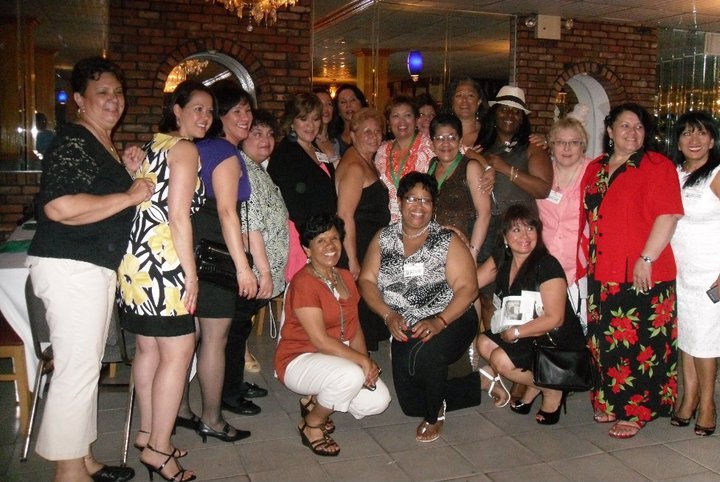 |
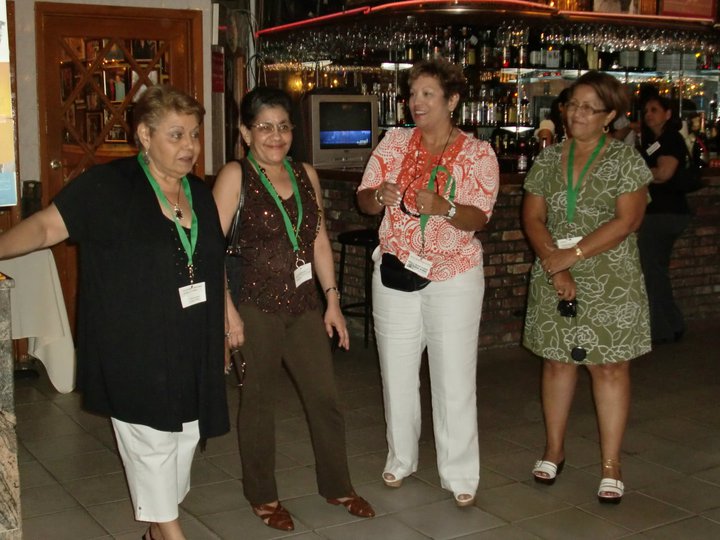
William H. Maxwell Vocational, 2011 Reunion Bella Vita's
Thanks to Evelyn Nieves for the shots of the committee and the group picture from their 2011 reunion.
|