        |
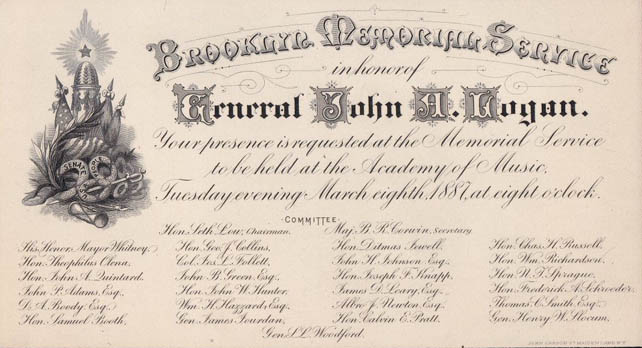 Logan StreetFormerly named Locust Street, it was changed in 1887 in honor of General John A. Logan, who led Union forces during the Civil War. General Logan was also instrumental in the development of Memorial Day as a national holiday. He died in 1886.Click on thumbnails to enlarge |
|||
|
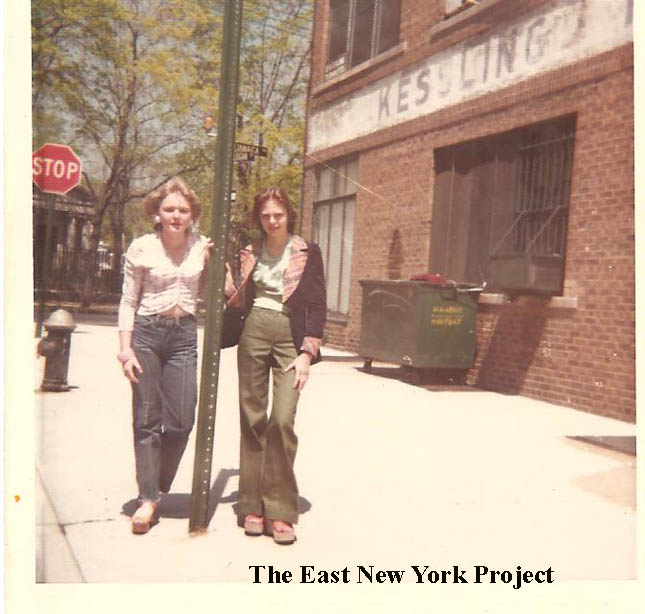
Jamaica and Logan, 1974 This page jumps around a bit, so I putting a new image at the top, which is also the top of Logan Street, where it meets Jamaica Avenue. This classic 1974 shot was sent in by Debbie Brodzinski, on the left, with her friend Maryann Bury. Kesslings Thermometers can be seen on the right, the company dates to 1892. Peter Stango relays a memory; " I used to go up there as a kid and get bits of mercury out of the sidewalk cracks on Jamaica Avenue. Wouldn't be surprised to find out there is hazardous soil up there someplace" | ||
|
|
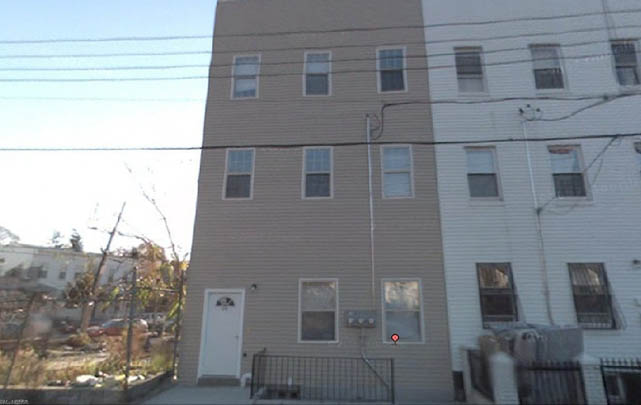
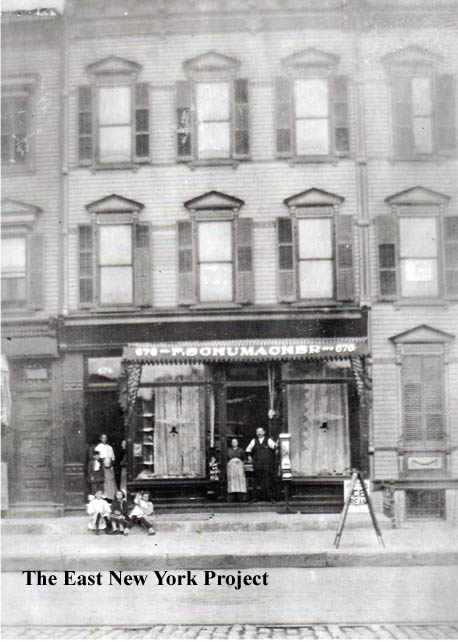
676 Jamaica Avenue West of Logan Street on Jamaica Avenue is 676 Jamaica. On the right is a view from 1906 from the Brian Merlis archives. Its hard to tell what business it is, but the partially blocked sign on the lower right is for Horton's Ice Cream. I haven't identified when the buildings to the left were demolished. Robert Hensel dropped me a note to tell me those houses were burned down in February of 1982 and demolished shortly thereafter.Eileen Scarpello lived at 678 until 1951 and informed me the first floor housed a repair business for NCR machines. Tom Reilly lived nearby in the 60s and recalled the corner building had Joe Scuturo's barber supply store on the ground floor. | |
|
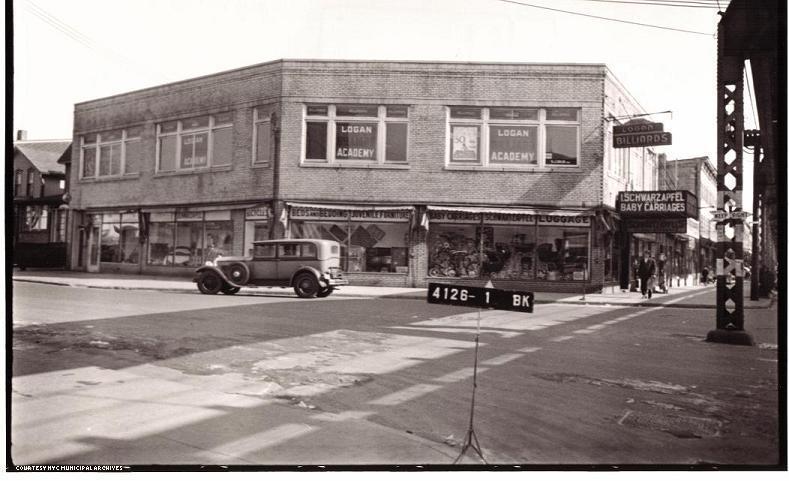
Logan and Fulton, 1941 Tim O'Reilly supplies this great tax photo shot of the northeast corner of Logan and Fulton. The wide view is present because this is where Force Tube Ave. also cuts in. I've had a few people mention the pool hall so here is your chance to add a little history with some recollections of the place. Tim recalls the building was known as "Standard Equipment" in his days. I found the CO from 1925 and the purpose of the structure was "Public Market Space and offices". It appears the property went into tax delinquency in the 1980s, but is now undergoing extensive renovations in 2006. Phil "Dukie" Santella worked for Standard equipment from 1955 and 1973 and confirms both Tim's recollection and adds a recollection. 
| ||
|

|
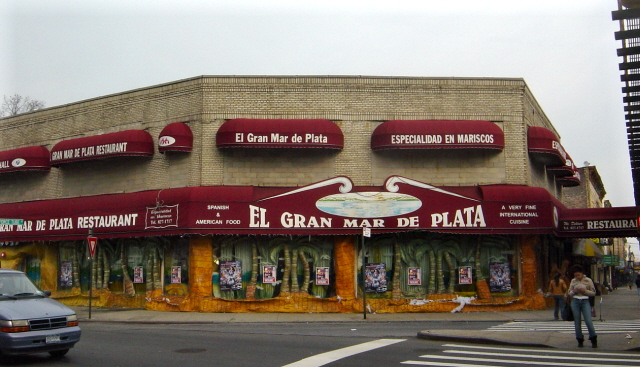
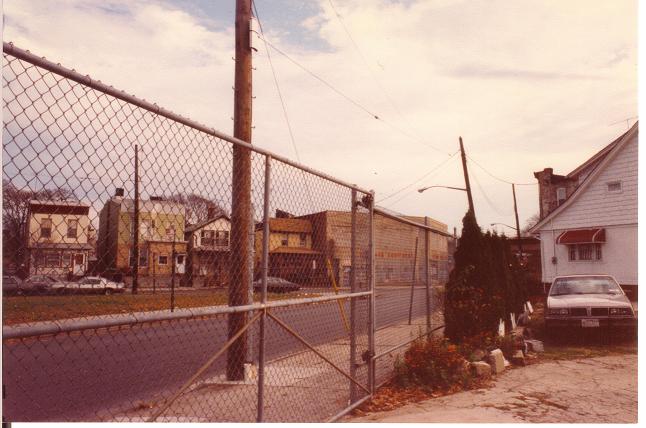
Logan and Fulton, 2006, 1982 Wow! I swung past this corner in December 2006 and what a sight. An Argentinian restaurant is on the lower level and there is no subtle marketing here. On the right, a shot from Rod Maggio's 1982 series when the building was clearly in transition. Rod recalls the pool hall was once owned by Mike Eufemia, a world class pool player. | |
|
|
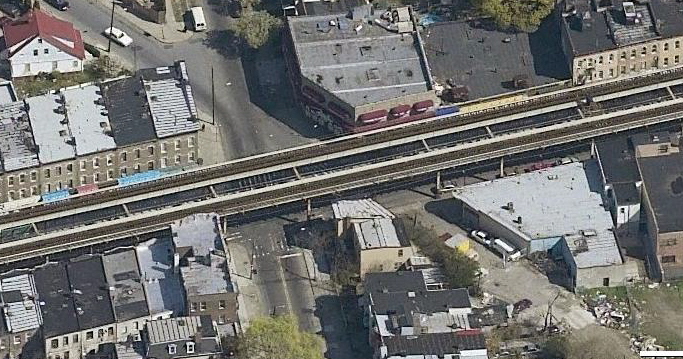
Force Tube and Logan Tim also supplied this 1992 view looking south down Force Tube towards Logan and Fulton. He notes that his mother's house at 179 Logan is also in view in the tax photo above. I added the local live aerial image from 2006. Tim recalls just south of Logan they took the wedge created by Force Tube and opened a playground. | |
|
|
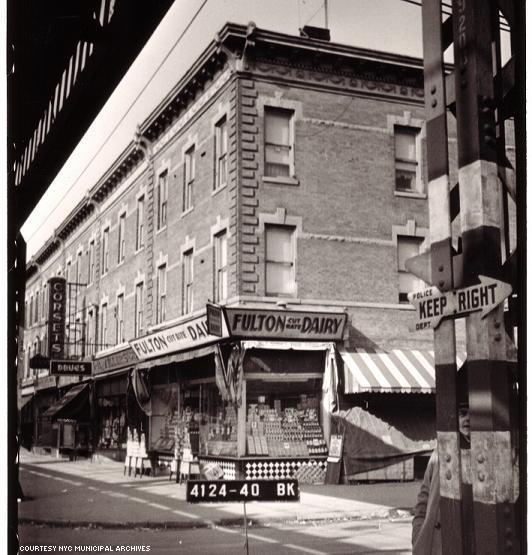
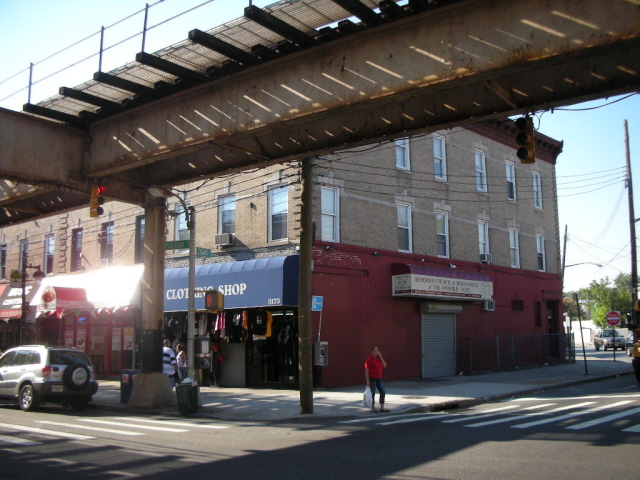
Logan and Fulton, 1941 Tim O'Reilly supplies this great tax photo shot of the northwest corner of Logan and Fulton. The shot brings to mind how an earlier generation would purchase beverages. My father explained how people would bring a bucket to a dairy and purchase milk by the bucket, making sure not to get the stuff "from the bottom of the tank" that didn't have any cream. Beer was also purchased in this manner from bars. Force Tube Ave. crosses over Fulton at this juncture but it is not evident in the shot. On the right a 2007 view. | |
|
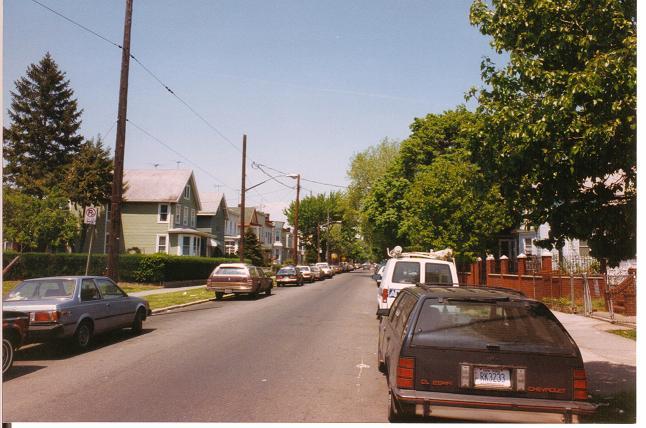 |
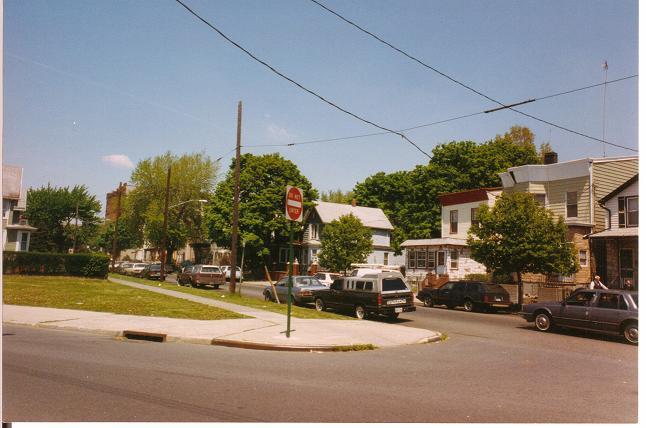
Logan St, 1993 Tim O'Reilly supplied these 1993 shots of Logan. This intersection is where Force Tube Ave. ends, it can be seen coming in on the left. Tim recalls the triangular lot created by this angle was always weedy and messy but looked pretty good in this shot. That lot has now been developed. The view is north up Logan and the house on the far right is his parents house. His folks are standing in front of it. Also note the apartment building in the distance near the left side of the shot. The second shot is of the west side of Logan taken from the same area. . | |
|
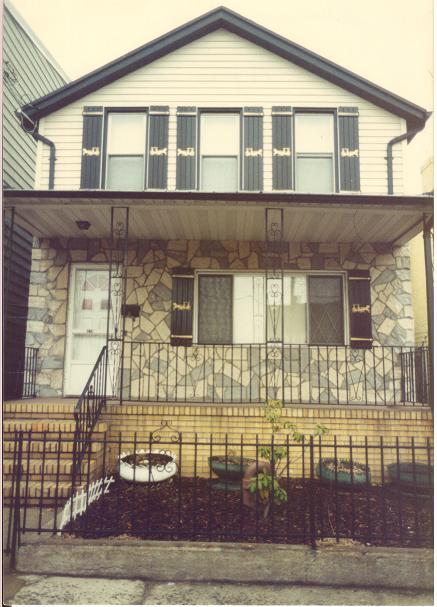 |
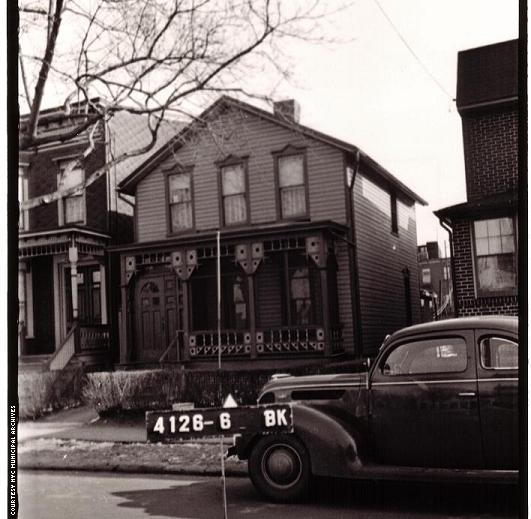
179 Logan, 1940, 1990 Tim O'Reilly also supplied these great views of his parent's house, 179 Logan, 50 years apart. That's the 1940 tax photo on the left displaying some great trimwork, and a photo Tim took in 1990. | |
|
|
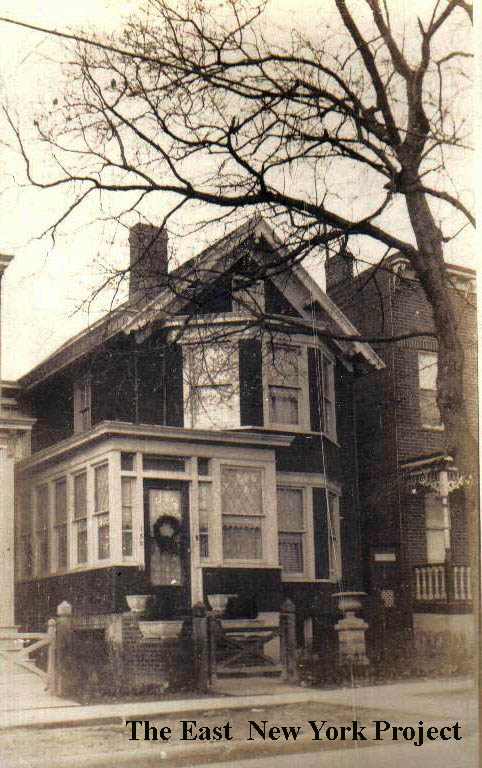
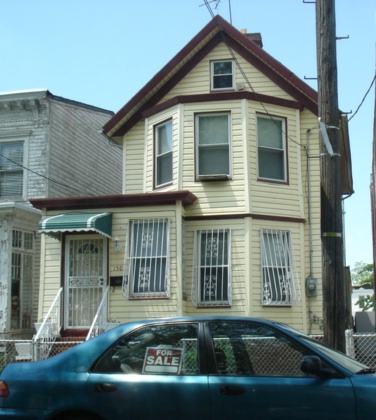
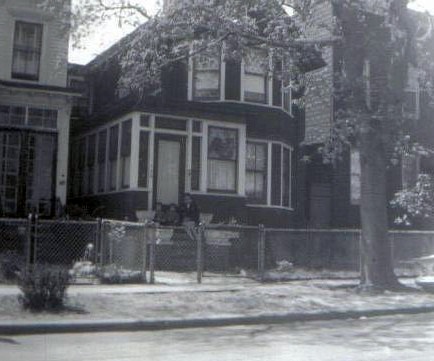
150 Logan, 1929 Frank Luchino sent in this great series of his childhood home. Though Frank suspected the house was built circa 1929, when the photo on the left was taken, I believe it was a remodeling and that house existed prior to 1908. Frank's family bought the house in 1961 and Frank was born there the same year. It has very unusual architecture; side porches are rare in ENY given the narrow nature of the lots and the double bay window in the front is unusual for wood frame construction. Franks' parents were there up to 1986 and the picture on the right is an updated view from 2006. | |
|
|
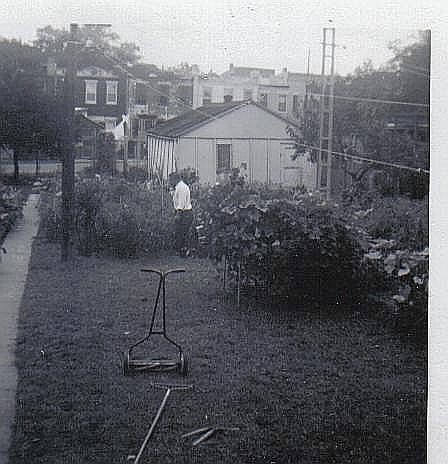
150 Logan, 1960s This is the house as it appeared in the 1960s, when Frank lived there with his parents Frank Sr. and Virginia, and brother Mike. The house sat on the west side of Logan, which meant they had a long strip of backyard facing Force Tube Avenue. Frank's father was an avid gardener, and turned that backyard into a vegetable garden. Frank recollects; "Many people passing by stopped to appreciate his work. He was very proud of it and would give away bags of tomatoes, figs from our fig trees or what ever he had growing at the time". | |
|
|
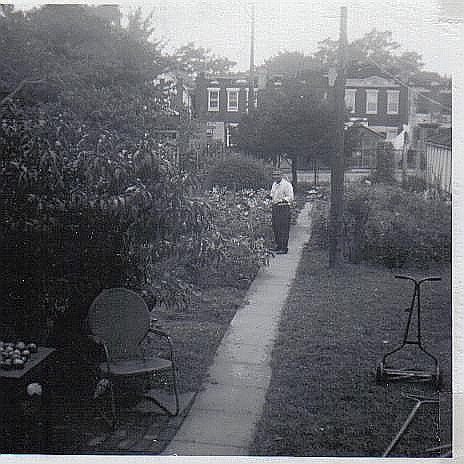
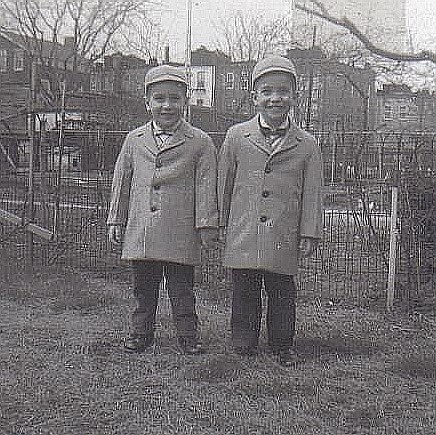
150 Logan yard, 1960s Completing the series with 2 more views of the yard. That's Frank and his brother Mike in the picture on the right. The view is north from their yard facing the back of houses on Ridgewood Avenue. They attended P.S. 65 and Frank has contributed some shots on that page as well. Many thanks to Frank for sharing the series and this unique home with us. | |
|
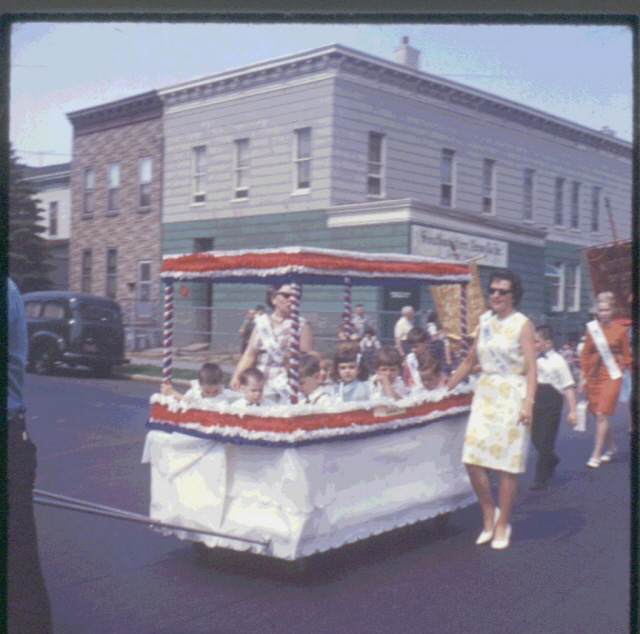 |
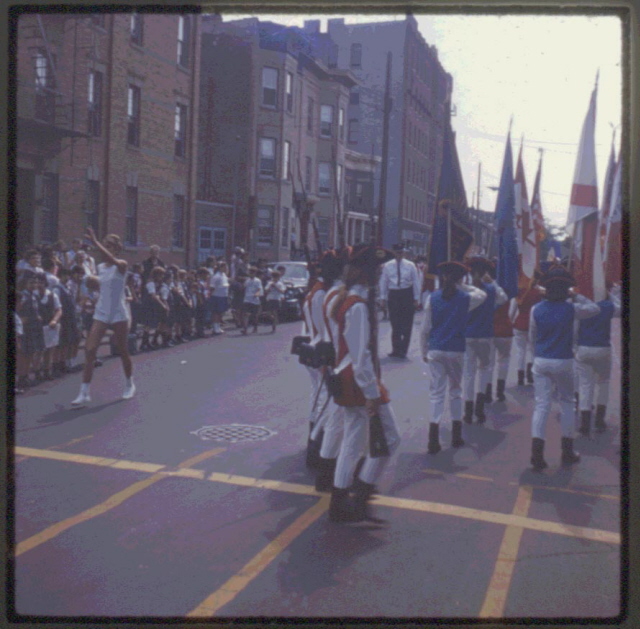
1967 Anniversary Parade Some shots from out Parades page. The building on the distance of Tim's shot is the one on the corner in the background of the first picture. The view is west down Ridgewood Ave. The second shot shows the northeast corner of Logan and Ridgewood. The building in the background is the "Southwestern Arms Co." I'm looking for some background information on that business. Al Gavin Jr. dropped me a note recalling his dad bought him an air rifle there in the early 60s. | |
|
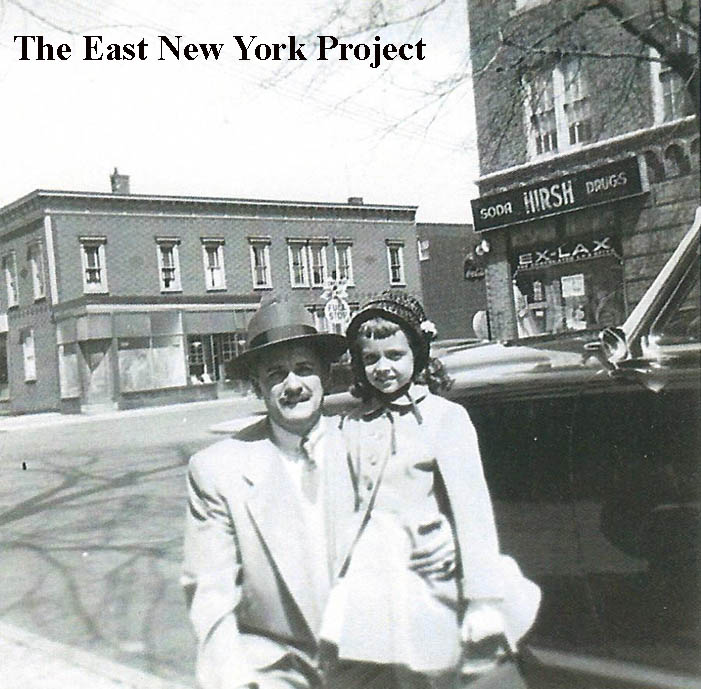
Logan and Ridgewood, 1954 Kathleen Mauro sent in this 1954 shot of her and her Dad on Easter Sunday. The view is northeast and in the background is that same "Southwestern Arms" building from the 1967 image above. Kathleen notes the store "used to be a beauty parlor and then a dancing school. Prof. Coles and his wife 'Miss Louise.' They eventually moved the school to Fulton Street." Kathleen also points out the Hirsh Drug Store and recalls around the corner was a Chinese laundry, a shoemaker, and Prackler's Deli. | ||
|
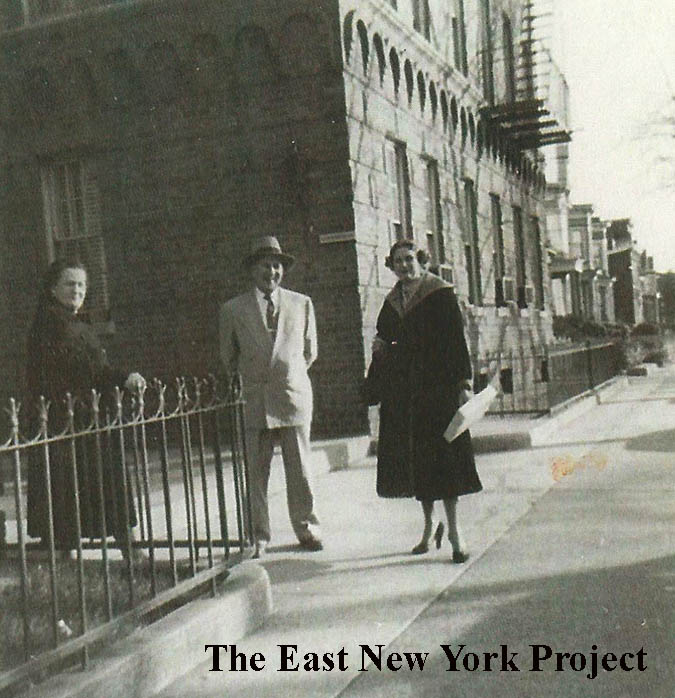
115 Logan, 1956 Kathleen Mauro also sent in this 1956 shot looking south down Logan towards Fulton Street. In the picture are Jean Mauro, Ben Friedman, and Mrs. Goldberg. | ||
|
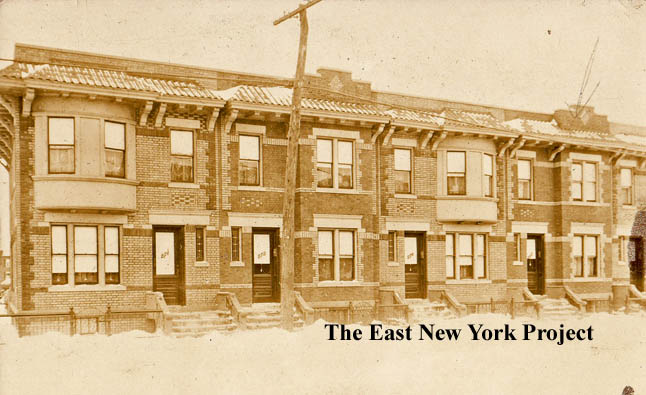
I haven't grabbed an update photo for this 1908 RPPC because the buildings really haven't changed! The location is the south side of Ridgewoood Avenue, just west of Logan Street. | ||
|
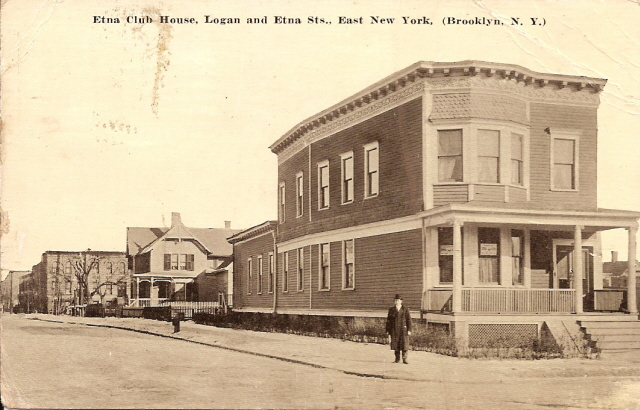
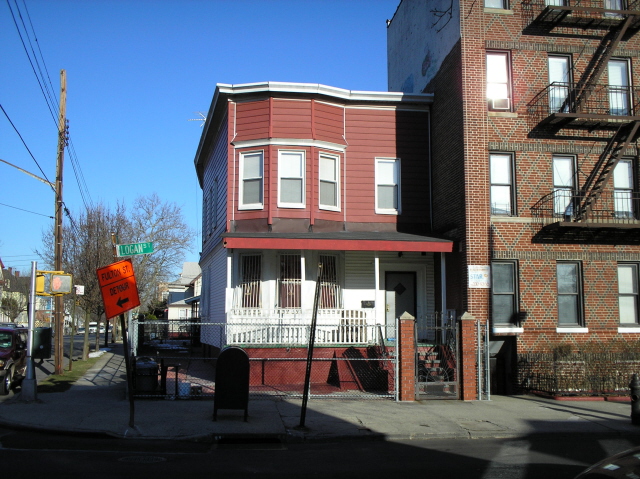
Etna Clubhouse, Logan and Etna St., East New York Maker:Kraus Dated: 1912 Status: Own(BG) Darlene Hutto recalls this being a Masonic Club building; she also recalls it was known as the Compass Club due to the Masonic Logo on the front of the building. Robert Hensel adds that his parents rented the hall for his graduation party in 1977; there was a sign for the "American Turners of Brooklyn" and there were also bowling alleys in the basement. Leonora Licata lived next door in the 1950s and recalls her mother was friends with the woman who ran the club, Ann Tiedemann (sp?). She used to bowl while the ladies drank coffee. Anthony Messina did some research for us and discovered an "Etna Club" listed in the 1916 Brooklyn Eagle Almanac at this location dating to 1903. My own research reveals the clubhouse was dedicated on October 18, 1908 though the club existed prior to that. The 1928 Almanac listed both the Compass Club of Brooklyn (1918) and Corner Stone Fellowcraft Club of Corner Stone at this address. Anthony also found evidence of and athletic association in a New York Times article quoted under the "History" button. Neil supplied the 2006 shot. 
| ||
|
|
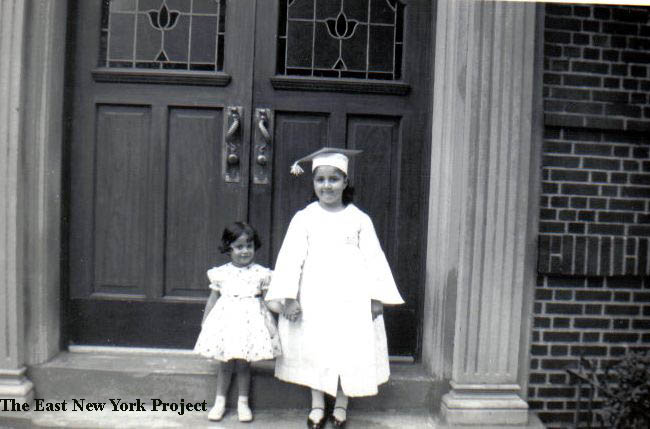
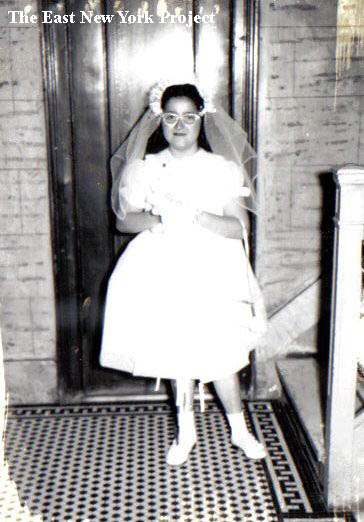
Logan Arms The next building down from the clubhouse was the Logan Arms, at 59 Logan. Lee Licata sent a 1955 photo of her and her sister Carmen, taken in front of the building on her kindergarten graduation, as well as an interior shot of the Greek Key tile flooring in the lobby on her first communion in 1957. | |
|
|
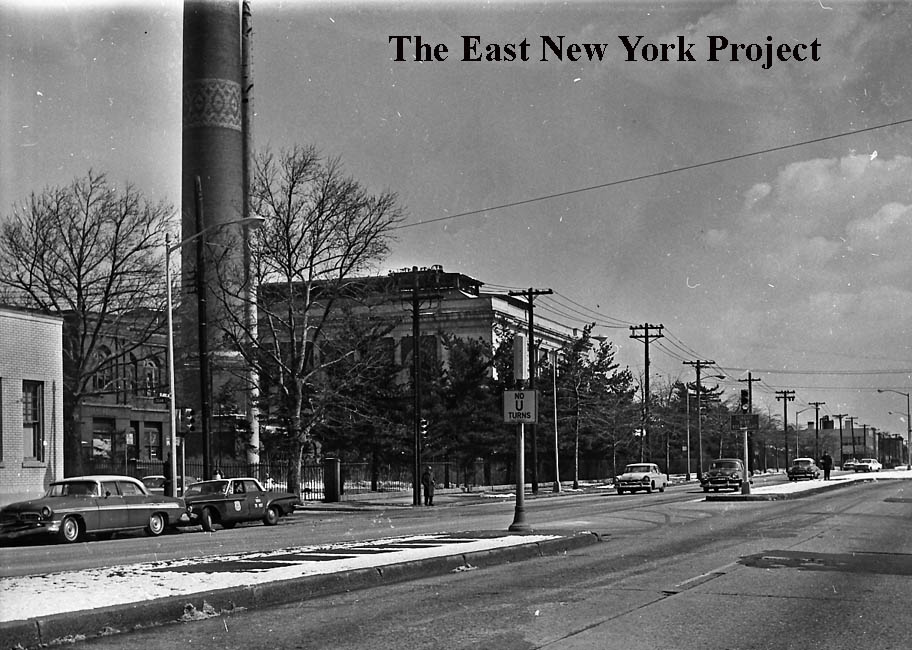
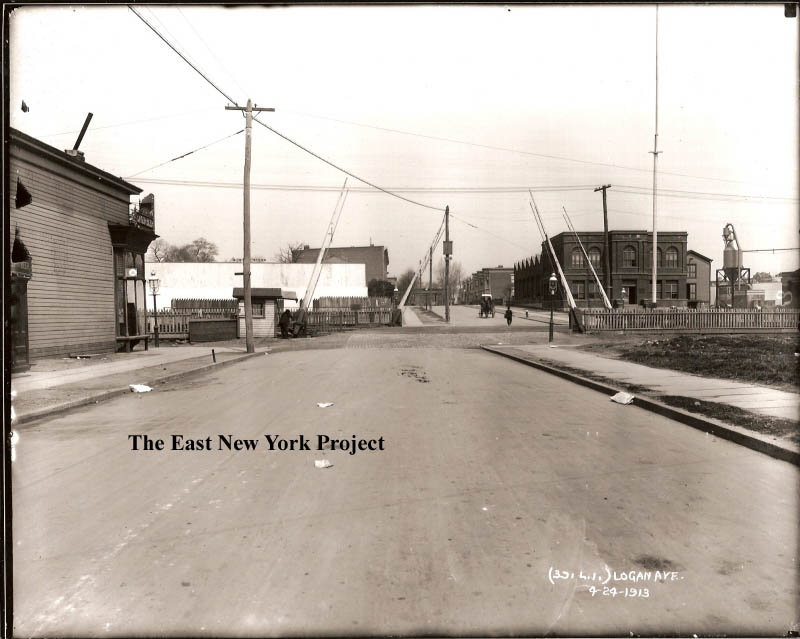
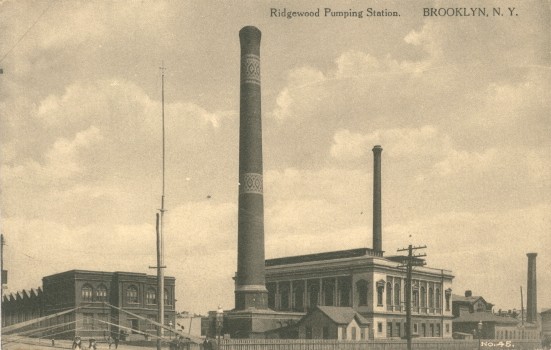
Atlantic and Logan Of course Atlantic and Logan was the location of the Pumping Station, also known as the Ridgewood Water Works. This view is from 1965 and there is a full page devoted to the pumping station here. On the right the view is looking north across Atlantic on Logan in 1913. The building on the northeast corner is part of the Pumping Station, though I am not sure what that tank is on the right. On the southeast corner the signs are advertising "Lager Beer", I can't tell if it is a bar or a distributor. The Jamaica El is visible in the distance. From the Brian Merlis Collection, this shot is also featured on our Atlantic Avenue page. | |
|
|
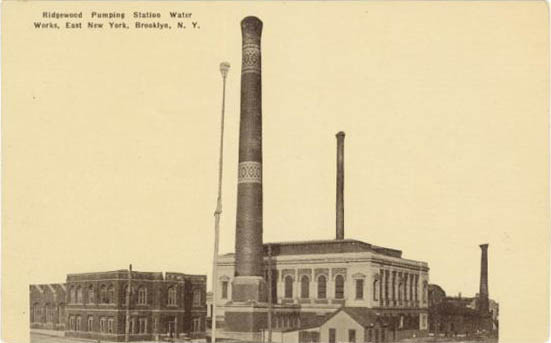
Ridgewood Pumping Station, Brooklyn Dated: 1915 Maker: Unk Status: Need Ridgewood Pumping Station Water Works Dated: 1907 Maker: Unk Status: Need Located at Atlantic and Logan, torn down in the 1960's for a public park. The chimneys were a landmark for a number of years. There is now a page devoted to the Water Works located here. | |
|
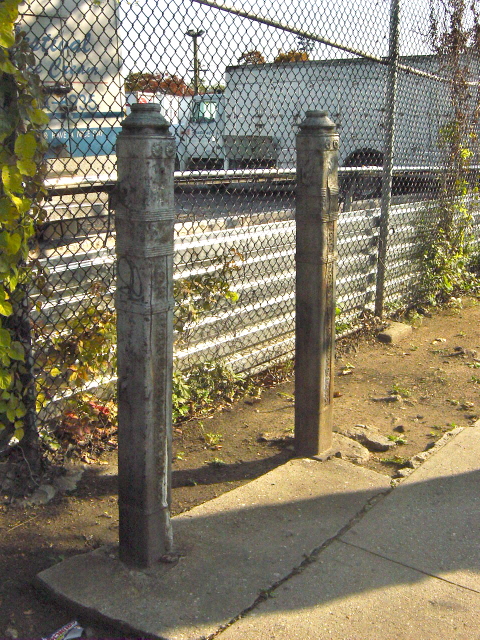
Atlantic and Logan These gateposts sat on the east side of Logan off of Atlantic Avenue, into the 21st Century but are now gone. Thanks to Robert Miller for pointing those out. | ||
|
|
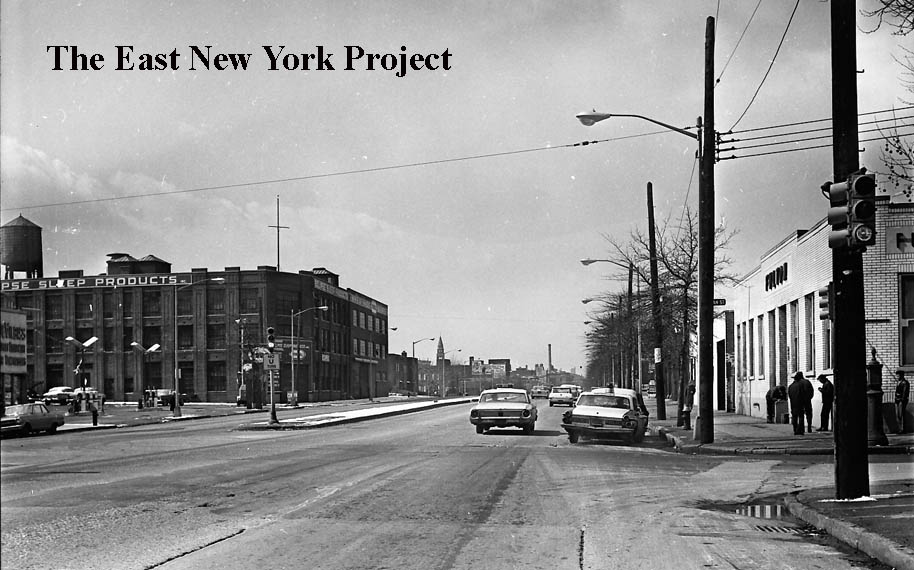
Logan Street and Atlantic Avenue, March 21, 1965 The first view is west from Logan Street. The second view is south down Logan to Atlantic. | |